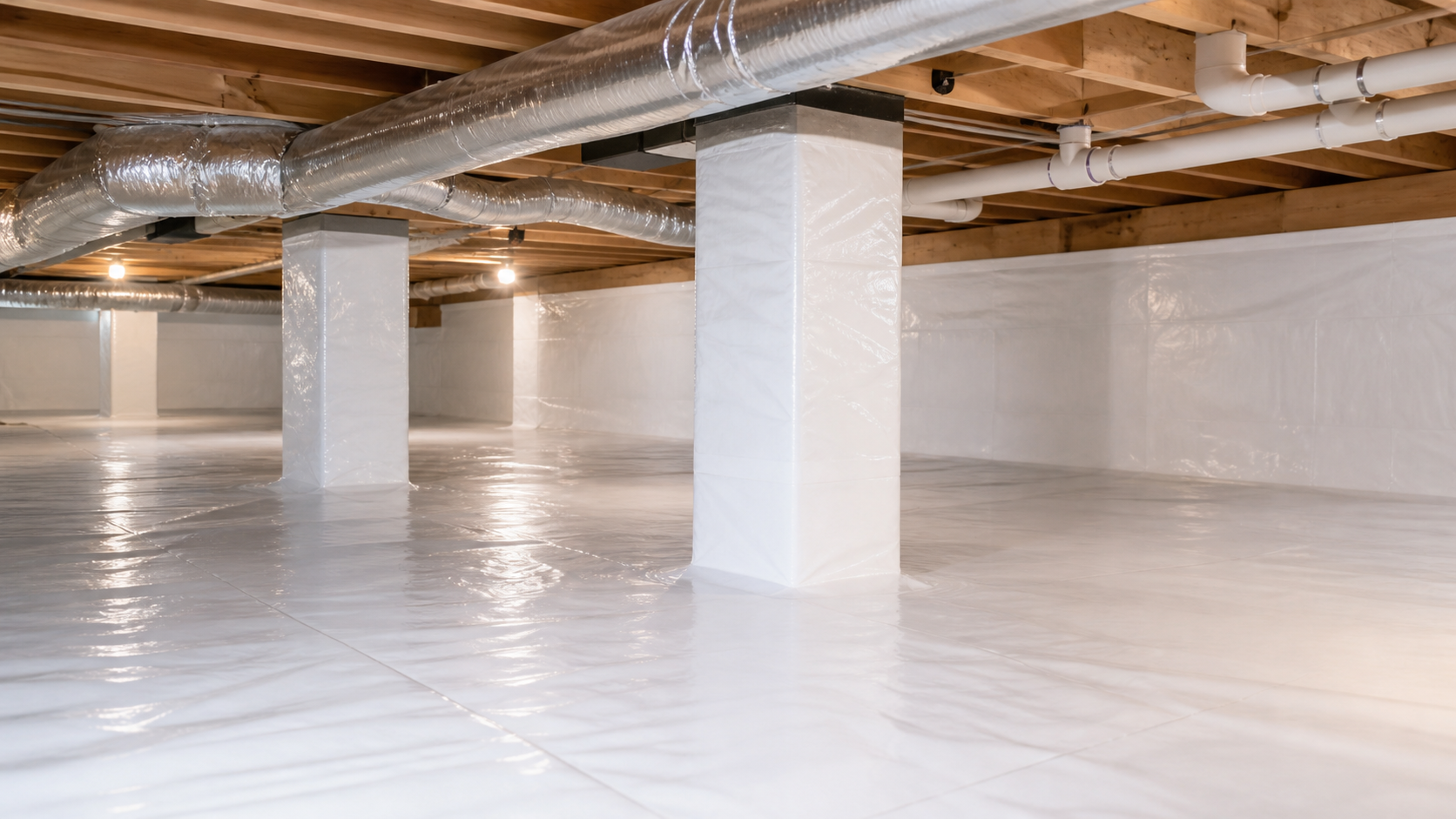
Short answer: A typical 2026 crawl space encapsulation project in Lexington, KY plans around $3,100–$7,000. The written price depends on size, access, preparation, liner details, water entry, drainage, dehumidification, insulation, and repair scope.
2026 crawl space encapsulation cost in Lexington, KY
Use these ranges to set a starting budget and compare estimates with the same inclusions. They are not fixed Bluegrass package prices.
| Service | Planning range | What changes the scope |
|---|---|---|
| Full encapsulation | $3,100–$7,000 | Size, access, preparation, liner coverage, detailing, drainage, humidity control, insulation, and repairs |
| Vapor barrier | $1,200–$4,500 | Floor coverage, liner type, seams, walls, piers, penetrations, removal, and preparation |
| Drainage and waterproofing | $1,200–$10,000 | Water source, route, excavation, access, and system extent; no Bluegrass sump-pump service is included |
| Crawl-space repair | $250–$15,000 | Affected component, moisture cause, access, and specialist review; complex structural work can be higher |
| Dehumidifier and humidity control | $600–$3,000 | Unit capacity, drainage, mounting, power, access, preparation, air sealing, and encapsulation |
| Crawl-space insulation | $700–$4,000 | Square footage, material, removal, moisture preparation, access, and installation location |
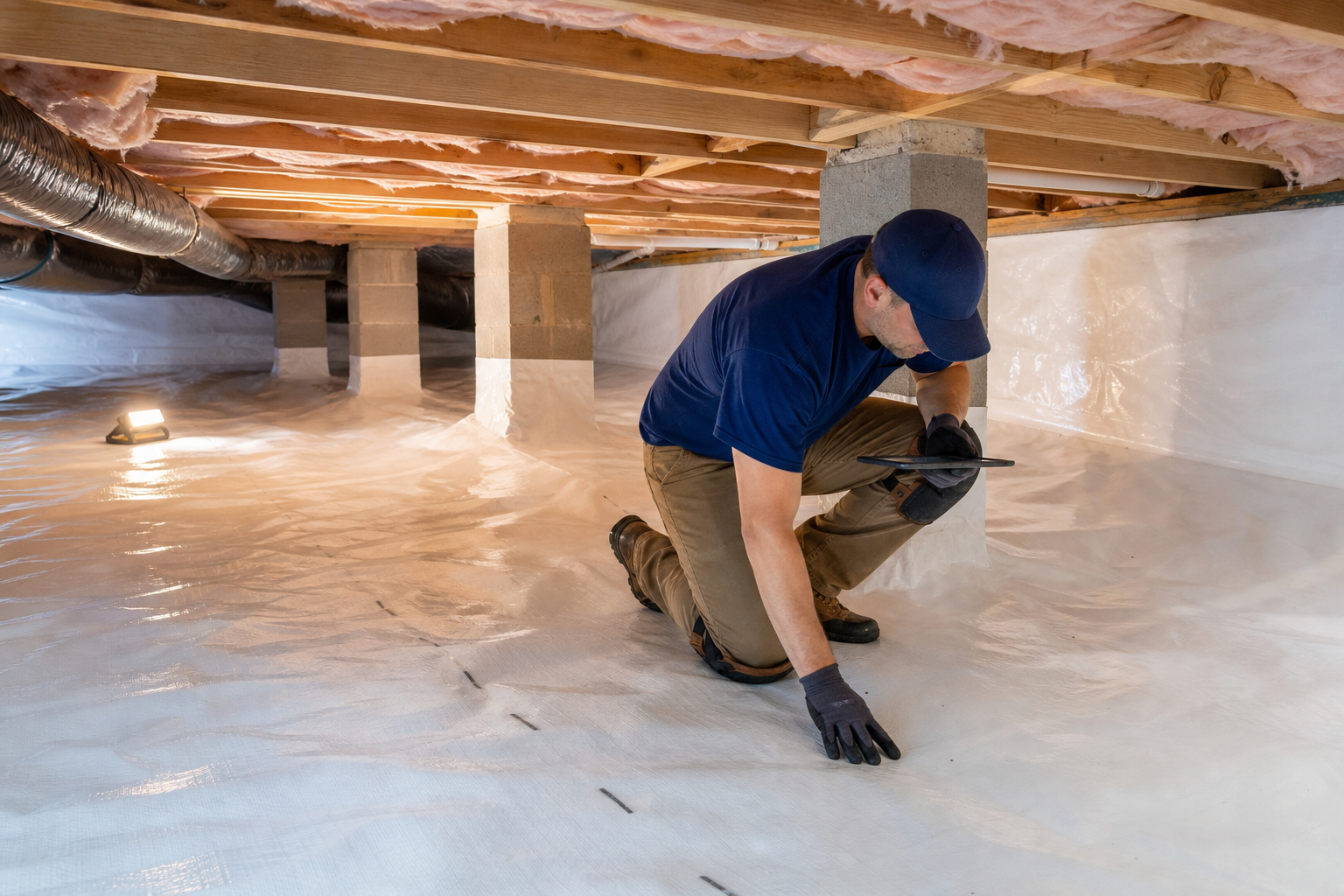
| Crawl-space inspection | $100–$400 | Inspection type, size, access, and testing; estimate-oriented visits may be priced differently |
Why crawl-space condition changes the cost
Square footage is only one cost factor. Mold growth, persistent humidity, water damage, wood rot, damaged insulation, pest-entry gaps, and limited access can change the preparation or specialist review needed before installation. Encapsulation materials, labor, wall and pier detailing, drainage, and dehumidifiers should appear as separate scope items when they apply.
How the inspection turns conditions into a scope
The pricing process starts by separating moisture sources. Exposed soil can call for a vapor barrier. Liquid water can require drainage or waterproofing before the liner. Humid air can make sealing and dehumidification part of the plan. Wet or fallen insulation, wood staining, accessible framing damage, and foundation-wall conditions may add preparation, repair, or specialist review. Each item should have a reason, a boundary, and a price line.
That sequence matters because one material cannot solve every crawl-space issue. A liner can limit ground vapor but cannot redirect an active water path. A dehumidifier can manage air moisture in a prepared crawl space but cannot replace drainage. New insulation can support the assembly after moisture is addressed, but it does not correct the source by itself.
How service combinations change a Lexington budget
A Lexington, Kentucky crawl space may need one service or a coordinated sequence. A sound floor vapor barrier can be the narrower choice when exposed soil is the main concern. Full crawl-space encapsulation can add wall, pier, seam, penetration, vent, and access details. Drainage systems address liquid water paths, while dehumidifiers manage air moisture in a prepared space. Crawl-space repair and insulation remain separate scope lines when the inspection identifies those needs.
Size, access, and preparation
Square footage affects material and labor, but two crawl spaces of similar size can produce different estimates. Low clearance, tight access, debris or old-material removal, numerous piers and penetrations, wet insulation, recurring water entry, and visible framing concerns can change the work required before installation begins.
Coverage and system details
Ask whether the quoted coverage includes only the crawl-space floor or also foundation walls, piers, seams, edges, vents, the access door, pipes, ducts, wiring penetrations, and future service openings. The estimate should identify vapor-barrier materials, drainage or humidity-control components, and exclusions as separate items so homeowners can compare the same system boundaries.
Repair and specialist boundaries
Water damage, wood rot, floor or joist concerns, foundation-wall cracks, mold-like growth, and pest activity can affect preparation, but they do not automatically belong in an encapsulation price. The written scope should state which accessible crawl-space repairs Bluegrass includes and which observations require a separate specialist evaluation.
Costs, benefits, and realistic expectations
The useful benefits depend on matching the solution to the condition. Moisture control can support cleaner inspection access and may help reduce conditions associated with musty odors, mold growth, pests, wood rot, damaged materials, indoor air quality concerns, and heating or cooling losses. A proposal should describe the intended function of each component without guaranteeing a specific health, energy-efficiency, or home-value result.
Maintenance access also affects value. The finished crawl space should remain serviceable so homeowners can watch for new water, torn liner, changing humidity, open vents or access gaps, pest activity, insulation changes, and new staining. Ask how the system can be inspected after installation and which maintenance tasks remain the homeowner’s responsibility.
How to compare Lexington crawl-space estimates
Compare the same written scope. Ask which floors, walls, piers, seams, penetrations, vents, and access transitions are included, and which preparation, drainage, humidity-control, insulation, electrical, repair, maintenance, or specialist items are included or excluded.
- Confirm the measured crawl-space size and accessible areas.
- List removal, cleaning, preparation, and repair allowances.
- Name liner materials and the floor, wall, pier, seam, penetration, vent, and access coverage.
- Separate drainage, waterproofing, dehumidifier, insulation, electrical, and repair costs.
- Record exclusions, specialist referrals, maintenance access, and any warranty or financing terms actually offered in the written proposal.
Prepare for the pricing inspection
Homeowners can make the visit more useful by noting where odors, dampness, condensation, insects, floor changes, or standing water appear and whether the symptoms follow rain or seasonal humidity. Share known plumbing leaks, drainage work, insulation changes, and previous crawl-space repairs. Clear safe access when possible, but do not enter an unsafe or visibly unstable area.
- Ask which crawl-space issues the proposed service is intended to address.
- Request separate prices for encapsulation, vapor barriers, drainage and waterproofing, dehumidification, insulation, and repair when more than one applies.
- Confirm whether the visit is an estimate, a paid inspection, or another inspection type.
- Keep the written scope, photos supplied with the proposal, and maintenance instructions together for later comparison.
What should Lexington homeowners budget for crawl-space encapsulation?
A typical 2026 planning range is $3,100–$7,000. Larger spaces and scopes that add preparation, drainage, dehumidification, insulation, or repairs can cost more.
Why can two Lexington crawl-space estimates be far apart?
The proposals may not include the same work. Compare coverage, preparation, liner and penetration details, drainage, humidity control, insulation, repairs, exclusions, and the inspection findings behind each recommendation.
Use this guide to compare Lexington, KY crawl space services
Bluegrass Crawlspace Co. publishes this guide for Lexington-area homeowners comparing crawl space solutions. Match each proposed service to the problem it is intended to address: ground vapor, liquid water, humid air, damaged insulation, or an accessible repair concern. Contractors may organize estimates differently, so the service name alone does not prove that two scopes include the same preparation, materials, coverage, installation process, or follow-up access.
Ask for a clear line between crawl space repair and foundation repair, and between crawl space drainage and basement waterproofing. Those broader specialist services are not listed as Bluegrass offerings. A useful estimate protects the homeowner from scope confusion by naming included work, excluded work, and the condition behind each recommendation.
Crawl space encapsulation cost by project scope
The $3,100–$7,000 crawl space encapsulation cost range is a starting point for a Lexington, KY home, not a universal project total. A floor-only vapor barrier is a narrower service. A more complete encapsulation system can add wall and pier coverage, sealed seams and penetrations, vent and access details, drainage coordination, humidity-control equipment, crawl space insulation, or accessible repair work when the inspection supports those items.
Questions that protect against scope surprises
- Which moisture or water problems is each line intended to address?
- Which floors, walls, piers, seams, penetrations, vents, and access transitions are included?
- Which products or materials are named in the written proposal, and what coverage will they receive?
- Are removal, preparation, drainage, dehumidification, insulation, electrical work, and repairs separate lines?
- Does the contractor’s written proposal include maintenance or warranty terms, and what do those documents actually cover?
Sump pumps are not a listed Bluegrass Crawlspace Co. service, so no sump pump price is included here. The company’s approved crawl space services are the seven linked in the table above. Use the inspection and written scope to choose the solution that fits the observed condition rather than assuming every home needs every component.